Soft Slouch Bags Win on Capacity, but Closures Decide It
Retail is leaning into relaxed shoulder bags. Their flexible capacity is useful, but an open top and unsupported base can make a sound rigid bag the better keeper.
Women's · October 19, 2026 · 8 min read
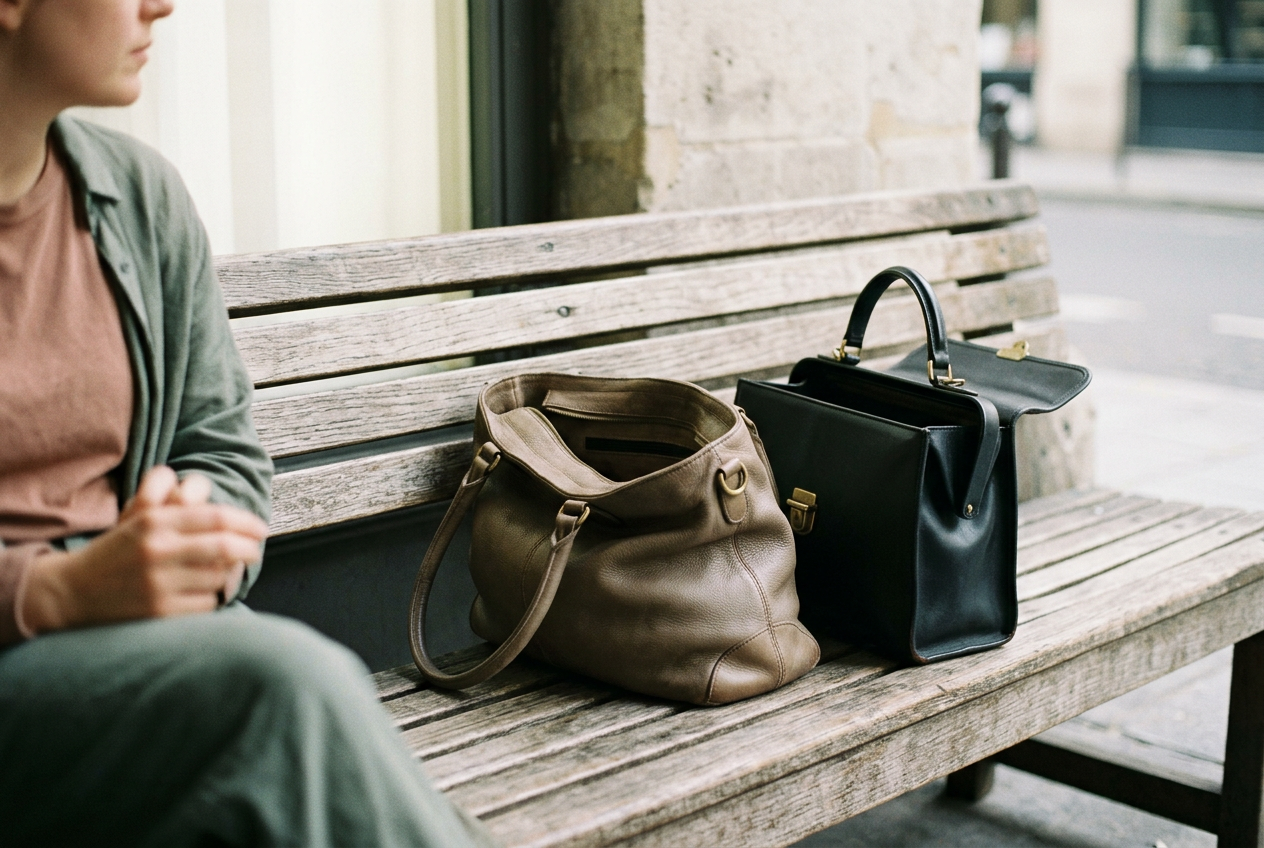
The clearest case is the Coach Brooklyn Shoulder Bag 28, a pared-back leather hobo with a wide shoulder strap and magnetic snap closure. Its natural grain leather is meant to relax rather than hold a geometric outline, and its current retail presentation makes the wider shift legible: the bag is shown close to the body, lightly filled and dipping through the middle instead of standing at attention.
That relaxed line is gaining space across brand sites, department-store edits and public trend reporting, where hobo bags, soft totes and elongated shoulder bags have displaced some of the small, rigid top handles that dominated polished styling a few seasons ago. Retail presentation is not sales data, and it should not be mistaken for proof that structured bags have stopped moving. It does show what stores want the eye to register as current.
For women deciding whether to participate, the useful question is not whether a bag slouches. It is whether that slouch improves the work the bag already does.
Softness creates usable capacity, within limits
A rigid top handle gives its owner a fixed container. The side panels, reinforced base and firm opening determine what fits, which can be reassuring until a sunglasses case or small water bottle meets an inflexible corner. The stated dimensions may sound generous while the usable interior remains oddly narrow.
The Brooklyn 28 behaves differently. Its leather sides can move around a soft pouch, paperback or folded scarf, and the top does not require every object to clear a framed opening. That flexibility is the strongest practical argument for the rising silhouette, especially for anyone whose daily load changes between commuting, errands and an evening out.
Retail photographs make this advantage hard to judge. A soft bag is often stuffed for photography, which spreads its base and smooths the leather without showing what happens when a phone, keys and makeup pouch settle into separate low points. A slouch bag that looks broad when filled with tissue may become a narrow hanging pocket in use, with everything collecting below the opening.
Capacity therefore needs a hand test rather than a dimensions comparison. Put your usual contents inside, lift the bag by its strap and check whether the opening folds shut under the load. Then remove one item without setting the bag down. If the lining wraps around your hand or the contents form a single dense layer at the bottom, the bag has visual volume but poor working capacity.
A rigid top handle can win here despite holding less. Its walls preserve sight lines, while internal dividers stop a cardholder from slipping beneath a pouch. That organization costs space, yet it also cuts the time spent searching. The trade is capacity for retrieval, not old shape for new shape.
The closure matters more than the silhouette
The Brooklyn 28 uses a magnetic snap, meaning two concealed magnetic pieces meet at the opening without a zipper track or turn lock. It is quick. It also asks the leather to fall into roughly the right position before the magnets can connect, so an overfilled bag may sit partly open even when the closure works as designed.
This is where soft bags gain and lose practical ground at once. A wide, unframed opening makes it easy to reach a phone with one hand, but the same opening may spread when the bag lies on a car seat or tips beside a chair. A zippered hobo controls that risk, although the zipper can shorten the usable opening and scrape the hand when the bag is packed tightly.
Rigid top handles usually impose a clearer sequence. Set the bag down, align a flap or frame, then fasten the lock. That can feel fussy during a commute, particularly when short handles must be held out of the way, but a positive closure gives better confirmation than a magnet hidden under folds of leather. Owners who carry medication, loose small items or work access cards may value that certainty more than quick entry.
Test closure access with the coat you wear most. A shoulder bag that opens easily over a T-shirt may become awkward under a thick sleeve, while a top handle carried in the crook of the arm can demand both hands once gloves enter the picture. The current silhouette should not add a repeated movement you already dislike.
There is also a security distinction that retail styling tends to soften. A magnetic closure is suitable for ordinary use when the opening tucks under the arm, as the Brooklyn 28 does, but it does not seal the bag. Crowded transit, overhead storage and frequent travel favor a zipper, flap or mechanically fastened lock, regardless of which outline looks newer.
Corner wear changes when the corners disappear
Rigid bags advertise wear at predictable points. Firm lower corners meet floors, chair legs and walls before the rest of the bag does, and a coating may split where the leather bends around that edge. Edge paint, a colored flexible coating applied to a cut leather edge, can also crack around handles and flap corners after repeated flexing.
Secondhand listings make those zones useful inspection points. On a structured top handle, ask for close photographs of all four base corners, the handle attachments, the underside of the flap and the edge coating around the opening. A seller’s straight-on image may show an excellent front panel while missing the abrasion that determines whether a repair is cosmetic or structural.
Soft slouch bags distribute contact less neatly. The Brooklyn 28 has no hard box corner to take every knock, so light scuffs can disappear into the natural grain and relaxed fold. That is a durability advantage. The cost appears lower down, where an unsupported base can sag around heavy objects and a broad area of leather may rub against denim, counters or the wearer’s hip.
Dark color transfer is especially relevant with pale leather and suede. A rigid bag may keep much of its side panel away from clothing, while a collapsed hobo creates more surface contact as it moves. Suede magnifies the problem because its raised nap, the soft surface formed by fine leather fibers, can flatten and pick up oils where the arm repeatedly presses against it.
Look for shape memory on resale, too. Shape memory is the tendency of material to retain a fold or bulge after the contents are removed. A soft bag does not need to look new or symmetrical, but one deep crease at the closure, a permanently stretched strap hole or a base that drops sharply beneath a former load can reveal stress rather than desirable slouch.
Rigid top handles are not automatically more durable. A firmly reinforced shell can preserve its outline for years, yet once a corner caves or a frame twists, the damage is conspicuous and may be difficult to correct. Soft leather accepts gradual change more gracefully. It also makes the point of failure harder to date.
Resale is a condition tool, not a trend scoreboard
Both silhouettes are readily visible secondhand, though availability alone says little about which one people prefer. A large supply may reflect popularity, long production runs or owners clearing out a shape that no longer suits them. The helpful signal is how examples age across repeated listings.
Search by model rather than by broad terms such as slouch bag. Compare several examples in the same leather and color, then note where wear repeats. If most listings show a darkened strap edge but sound bases, that model may tolerate heavy contents while reacting to skin oils. If structured examples repeatedly show rubbed piping, the narrow trim sewn along an edge, the architecture may be directing every impact to the same place.
The Brooklyn 28 is useful here because its simplicity leaves fewer decorative elements to distract from condition. The buyer can concentrate on the strap, snap area, upper folds and lowest section of the body. A comparable rigid top handle requires another pass over hardware alignment, handle bases and corner symmetry. Neither inspection is better.
One is less complicated.
Secondhand also offers a low-waste route into the shift. A preowned hobo in grained leather can test whether the softer carrying style works before a higher-priced purchase, and visible creasing is less alarming when the design is supposed to relax. Avoid paying a premium for an immaculate soft bag if the first month of ordinary use will create the same folds.
Keep the functional bag until the failure is real
A seven-day comparison can settle this without a purchase. Carry your existing rigid top handle with its normal load, recording only the moments when its fixed shape blocks an item, its closure slows access or its corners require special handling. On another day, loosen any removable internal organizer and use a longer strap if the design permits it. Those changes may solve the problem attributed to the silhouette.
Then borrow or try a soft bag with a closure similar to the Brooklyn 28. Use the same contents. Do not judge it empty in a mirror; lift it after the load has settled, open it one-handed and place it on the surfaces you encounter during an ordinary day. The bag earns replacement status only if flexible capacity removes a recurring nuisance without introducing a worse one.
The softer outline has practical momentum, particularly in grained leather that can absorb folds and minor scuffs. A rigid top handle remains the sounder choice when it stands securely, closes with confidence and keeps small items visible. That conclusion is less exciting than a full silhouette change. It is also cheaper than replacing a bag whose only failure is looking familiar.
Questions people ask
Do slouch bags hold more than structured bags?
They often accept irregular objects more easily because the sides and opening can flex, but that does not guarantee better usable capacity. A soft bag may pull into a narrow pouch once lifted, while a smaller structured bag can keep its full interior accessible through firm walls and dividers.
Is a magnetic closure secure enough for everyday use?
A magnet can work for ordinary errands and office use when the opening sits close under the arm. It does not seal the bag, and overfilling may stop the magnets from meeting, so a zipper or fastened flap is more dependable for crowded transit and travel.
Which silhouette wears better at the corners?
Soft bags avoid the sharply defined corners that show abrasion early, particularly when made from grained leather. Their lower panels can still sag and rub across a wider area. Structured bags concentrate wear at corners, piping and edge coating, which makes damage easier to inspect but harder to overlook.
Should
I buy a slouch bag secondhand to try the trend?
Yes, if the listing includes clear photographs of the strap attachments, closure folds and lowest part of the bag. Choose a model whose existing creases suit its intended shape, and skip examples with stretched hardware holes or a base that drops sharply under no load.
One update a day
Today's fashion update, in your inbox
One fashion update each morning — no hype, no filler, just pieces worth wearing.