Crochet Bags Go Mainstream, but Their Linings Lag Behind
Crochet accessories are reaching wider retail, where loose stitches and weak linings meet the weight of daily use. Construction, more than the trend itself, decides what lasts.
October 13, 2026 · 8 min read
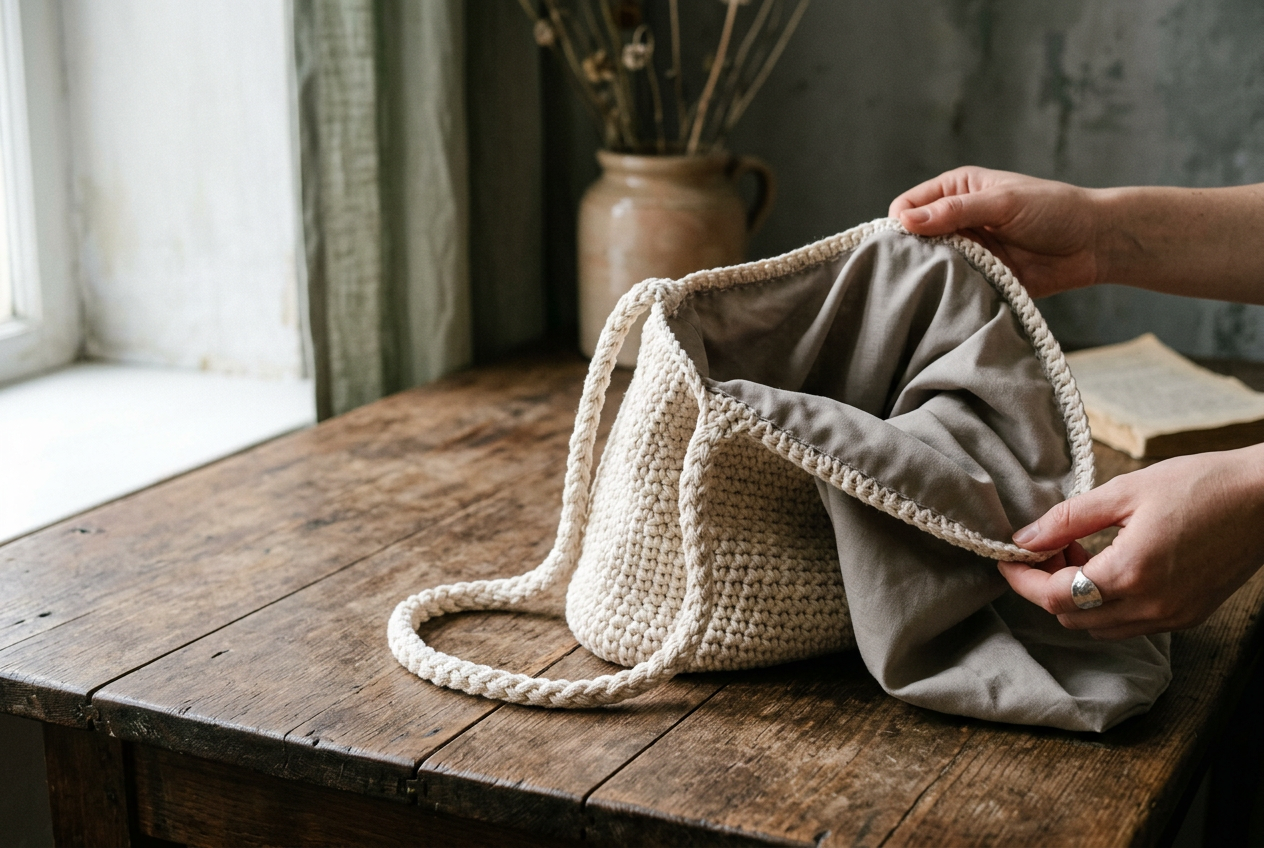
Keep one bag in view: a cream cotton shoulder bag with an open fan stitch, a narrow crocheted strap and a polyester lining attached only around the opening. It is a composite of construction details visible across public retail listings, rather than a named product, and it represents the version most likely to disappoint. Carry it for a week with a half-full water bottle, paperback, sunglasses case and light cardigan, and the likely failure is not dramatic. The strap lengthens.
The lining drops below the shell. By Friday, the opening sits closer to the hip and the base has lost its clean curve.
That bag explains the problem with crochet's retail expansion. The surface looks laborious and tactile, which gives even a simple shape visual weight, but a product page can show none of the load paths that decide whether the bag survives regular use. This construction advice is unisex: fiber and stitch behavior do not change across wardrobes, although strap length and hat circumference still need to suit the wearer.
The label tells less than the stitches
Seasonal assortments now extend crochet and crochet-look openwork beyond specialist makers into shoulder bags, totes, bucket hats and belts. Some pieces are hand-crocheted; others use knitted or woven structures that imitate the appearance. Either can work. The important distinction is that crochet on the product name is an aesthetic description unless the retailer also gives useful information about fiber content, dimensions and lining.
Start with the cream bag's cotton shell. Cotton feels dry and substantial, takes color well and makes defined stitches, but it has little natural spring compared with wool or many synthetics. Once a narrow cotton strap has lengthened under weight, it may not return fully to its original measurement. Water adds another complication because wet cotton becomes heavier, so washing or an unexpected shower can pull the bag farther out of shape while it dries.
Synthetic yarn changes the balance rather than solving it. Acrylic can feel lighter and recover better from mild deformation, though a fuzzy version may pill where it rubs against clothing. Polyester often tolerates abrasion well, but an open polyester stitch can still distort because the loops move even when the fiber itself remains strong. Paper yarn and raffia-style fibers make a crisper bag or hat, yet repeated folding and moisture are harder on them; they suit a structured vacation piece better than a bag that gets pushed under a desk.
Blends can be sensible. A cotton-synthetic yarn may keep cotton's matte look while adding some recovery, although the percentage alone cannot predict performance. Twist matters, too: a firmly twisted yarn usually presents fewer loose fibers for jewelry, zippers or rough furniture to catch than a soft, lightly twisted one.
Openwork has a load limit
Stitch density is the next filter. Gauge, meaning the number of stitches and rows within a measured area, affects how much room each loop has to shift. A dense single-crochet fabric usually changes shape less than a large fan, shell or net pattern made with the same yarn, because the loops are smaller and supported by more neighboring stitches.
Use your hand in a store. Pinch a section between finger and thumb, then pull gently in two directions. A bag does not need to feel rigid, but the openings should return close to their previous shape instead of staying elongated. Repeat the check at the strap attachment and the upper edge, where weight concentrates.
If those areas use the same loose openwork as the decorative body, the cream bag's week-long sag is already visible in miniature.
Snagging is the second cost of openness. A long exposed loop can catch a ring setting, coat zipper or chair edge, and pulling it back into place requires easing the extra yarn through adjacent stitches rather than cutting the loop. Dense panels at the base and opening reduce that exposure without removing the handmade-looking surface from the rest of the bag.
Hats receive less load, but they have their own distortion pattern. A cotton crochet bucket hat can widen around the opening as it is pulled on and off, while an open brim may become wavy after packing. Dense stitches around the crown and a woven sweatband inside the opening give the shape more resistance. A full lining is optional and can make a summer hat hotter; a stable inner band is often the more useful intervention.
A lining must carry weight
Return to the cream bag. Its loose polyester lining hides small belongings, but because it is attached only at the opening, it behaves like a pouch hanging from the weakest part of the crochet shell. Add a bottle and the lining pulls downward on that rim. The shell stretches around it rather than sharing the work.
A better lining is cut as a bag-shaped structure, with enough room for movement but not enough to pool below the crochet. It should use a stable woven fabric rather than a stretchy jersey, and its seams should be finished so keys and pen clips cannot work into raw edges. Attachment at the opening remains necessary, but discreet anchor points along side seams or at the base can stop the lining from floating independently when the outer construction permits them.
The handles matter more. A properly supported strap connects to a reinforced woven band, lining seam or other stable internal structure, so the weight travels through more than a handful of yarn loops. If the handles are crocheted, look for dense stitches, limited stretch and broad attachment points. A narrow strap sewn directly onto open motifs asks those motifs to function as hardware.
Pockets reveal the same logic. A pocket stitched only to the crochet exterior can pull a rectangle into the openwork when loaded. One sewn into the lining keeps that strain inside the woven layer. For a phone pocket, the difference appears quickly.
None of this requires a stiff, fully backed bag. Some movement is part of crochet's appeal, and a structured lining can flatten the surface or make the shell pucker if it is too small. The useful target is controlled give: the crochet can move around the lining, while the lining limits how far it travels.
Price does not certify the inside
At the seasonal impulse-buy end of the market, an unlined crochet bag can make sense as a light carrier for sunglasses, a scarf and little else. It is not good value if the styling suggests a commuter tote but the base expands around a water bottle. At a mid-market or contemporary price, a floating lining and unsupported handles are harder to excuse.
Higher prices may reflect hand labor, unusual yarn or small-scale production rather than added reinforcement. Those qualities can justify the cost, but they do not automatically make the piece suitable for repetition. Product photographs should show the interior, strap attachments and base. If they do not, the returns policy becomes part of the buying decision.
The cream bag therefore fails a narrow test, not a taste test. Its open cotton fan stitch is attractive, but the narrow strap and rim-hung lining make it a light-occasion bag presented in the shape of an everyday one. A dense crochet tote with a load-bearing woven lining is the practical alternative. A small raffia-style bag can also work if it stays dry and is not folded.
Keeping the shape you bought
Do not store a crochet bag by its handles, especially with anything inside. Empty it, support the body with clean tissue or a soft cloth, and place it flat or upright without crushing the sides. Follow the care label before washing; if water is permitted, reshape the piece while damp and dry it supported rather than hanging.
A pulled loop should not be cut. Use a blunt needle or crochet hook to distribute the slack into adjacent stitches, working gradually until the enlarged loop is less visible. For a lining that has detached, repair the seam before using the bag again, since one loose section can transfer the full load to the remaining stitches.
Questions people ask
Do crochet bags always stretch?
No, but all looped structures can change under load. Dense stitches, firm yarn and a lining that carries the contents limit the movement. Cotton bags with narrow straps and large open motifs are more likely to keep some of the extra length they develop during wear.
Is an unlined crochet bag worth buying?
It can be, if the bag is small, densely stitched and intended for light contents. An open tote without a lining lets keys and corners push through the gaps, while the shell carries every ounce directly. Treat that version as an occasional accessory rather than a substitute for a woven everyday tote.
Can a lining be added to an existing crochet bag?
Yes. A repair shop or competent home sewer can make a woven fabric lining shaped to the bag, then attach it without tightening the crochet opening. Ask whether the handles also need reinforcement, because a new lining will not prevent stretch if the full load still hangs from loose yarn loops.
How should a crochet bucket hat fit?
It should sit securely without relying on the stitches to stretch around the head. Check the retailer's circumference measurement and allow for any inner sweatband, which reduces the usable space slightly. If the opening already feels tight, repeated pulling can widen the edge while leaving pressure at the band seam.
One update a day
Today's fashion update, in your inbox
One fashion update each morning — no hype, no filler, just pieces worth wearing.