Capri Pants Are Easier to Find. The Old Fit Problems Remain.
More capris are reaching stores, but availability has moved faster than fit. Hem position and calf room decide whether the revival feels considered or merely familiar.
Women's · August 10, 2026 · 7 min read
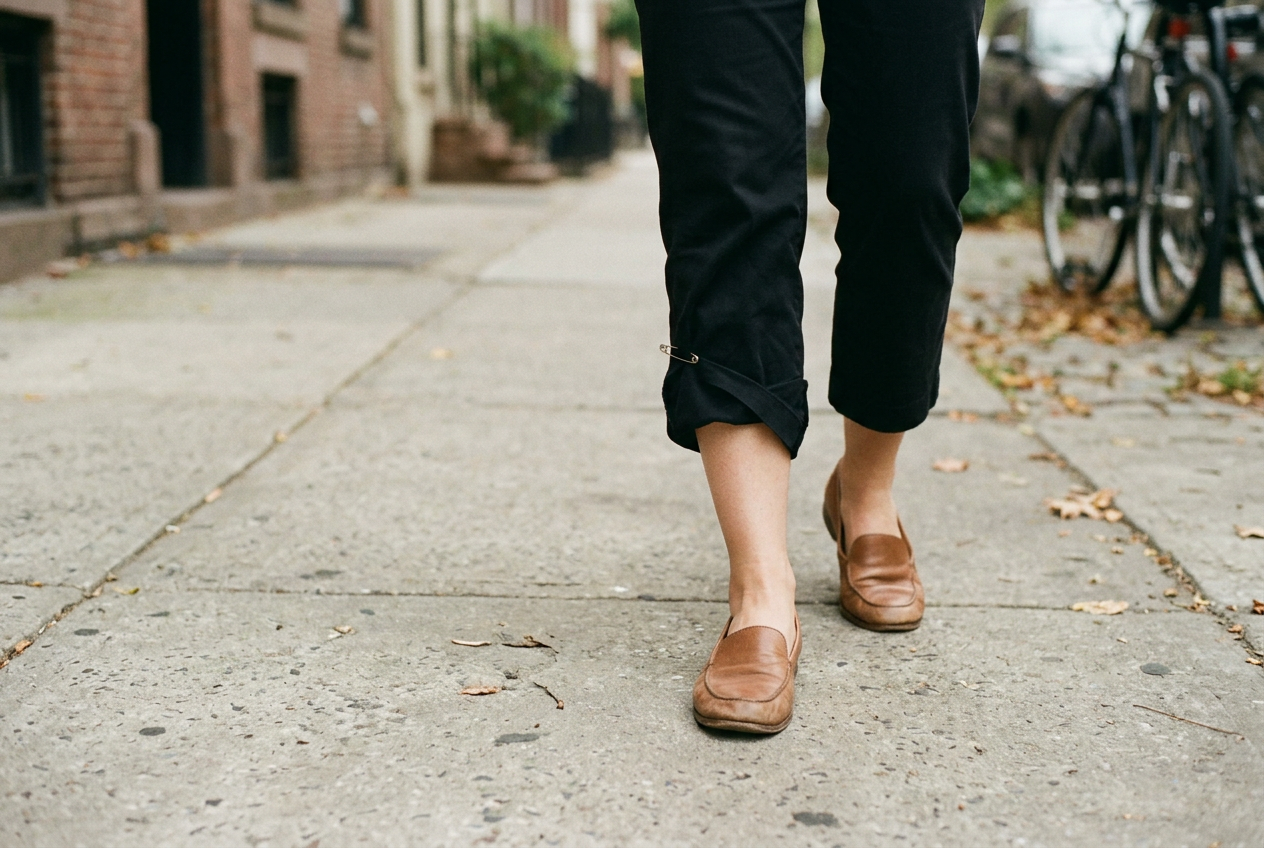
The pair that clarified this was black cotton-elastane twill: close through the hip, mid-rise, and cut to end directly across the fullest part of my calf. Capri pants, meaning pants that finish below the knee but above the ankle, have become conspicuous again across women's seasonal assortments, yet this otherwise ordinary pair reproduced the reason many people stopped wearing them. The hem looked deliberate while I stood still. After sitting and walking, it caught on the calf and stayed there until I pulled it down.
Over a week, I tried the pair with flat leather loafers, a low-profile sneaker and a small block heel. The shoe changed the overall line, though it could not fix the gripping hem or the waistband tipping forward after several hours. Pinning the legs roughly an inch higher helped more than changing the footwear did, because the new hem sat just beneath the calf's widest curve rather than cutting through it.
That distinction matters. Retail visibility tells us that capris are rising again; it does not prove that the garment has been redesigned around the old trouble spots. Some current versions are more convincing, especially wider woven cuts and slim pairs with a little stretch, but the word “capri” still covers sharply different proportions. Shopping by label alone remains a poor strategy.
More stock does not mean a better pattern
The return is easy to see in women's fashion coverage and in product assortments ranging from mass-market retailers to premium labels. There are narrow black cigarette-like versions, pull-on jersey crops and fuller cotton pairs that approach culottes. The shared feature is exposed lower calf, while almost everything affecting comfort and proportion varies.
That wider selection improves the odds of finding a workable pair. It also makes the trend look more resolved than it is. A retailer can shorten an existing trouser pattern and call the result a capri without changing the leg shape, even though shortening alters where the fabric must accommodate the body. A full-length straight leg may have plenty of space at the ankle; cut it at mid-calf, and the same opening can become restrictive.
The black twill sample showed this plainly. Its hem circumference, the measurement around the leg opening, was wide enough to pass over my foot but not generous enough to slide freely over my calf in motion. Stretch made the problem less painful, not less visible. The fabric pulled into shallow horizontal lines behind the leg, then bunched above the hem after I stood up.
A better pattern gives the calf somewhere to go. That may mean a clean vertical fall from the knee, a side slit that opens under strain, or enough stretch recovery for the leg to expand without leaving the fabric rippled. Stretch recovery is the fabric's ability to return to shape after being pulled. Soft jersey often feels accommodating at first, but a weak knit can loosen around the seat and knees while the hem continues to cling.
The hem needs to miss the calf's widest point
Hem position does the most visual work. A narrow capri ending at the widest part of the calf creates a hard horizontal stop, and if the opening grips, the pants read as too small even when the waist and hip fit. Moving that hem slightly upward or downward can change the result more than switching tops.
On the black pair, raising the hem by about an inch exposed the point where the calf began to narrow. The leg then looked straighter, and the hem stopped riding up as often. Lowering it toward the narrow area above the ankle also worked visually, but that adjustment moved the garment closer to an ankle pant, which has a quieter, less distinctly revived silhouette.
There is no universal ideal length because calf shape and height alter where the useful narrow points fall. The practical test takes less than a minute in a fitting room. Sit, cross one leg, stand and walk several steps. If the hem remains parked above the calf or needs a downward tug, the opening is too tight, the position is wrong, or both.
A flattering front-view photograph cannot overrule that mechanical failure.
Wider capris avoid some of this tension, although they introduce another tradeoff. A broad leg that ends just below the knee can feel balanced and cool in cotton poplin or linen, yet stiff fabric may project away from the body and resemble a shortened work pant. Fabric with some drape, meaning it falls rather than holding a rigid shape, lets a fuller cut hang closer to the leg without grabbing it.
Rise changes the silhouette before shoes enter it
Rise is the distance from the crotch seam to the waistband. On a cropped trouser, it determines how much visual length remains between the waist and the shortened hem, which is why two pairs at the same calf point can look unrelated.
The mid-rise waistband on the black twill pair sat below the natural waist and dipped at the front when seated. With a tucked shirt, that downward angle made the torso look longer while the legs already appeared shortened by the hem. Wearing the shirt loose hid the waistband but did not solve its movement. A higher rise held the waistline more steadily in a comparison fitting and made the abbreviated leg look intentional, particularly with a close or straight cut.
A lower rise can work when the capri is loose through the hip and styled with a longer, relaxed top, but it asks the wearer to accept a more specific early-2000s proportion. That may be the point. It is less adaptable for someone buying one pair to wear with existing shirts and light jackets.
Check the back rise as well as the front. If the waistband pulls down when sitting, sizing up may add unwanted hip volume without adding enough vertical room. The better alternative is a different cut, ideally one with a contoured waistband that curves to follow the body rather than a straight band that must tilt to fit.
Shoes can finish the line, not repair it
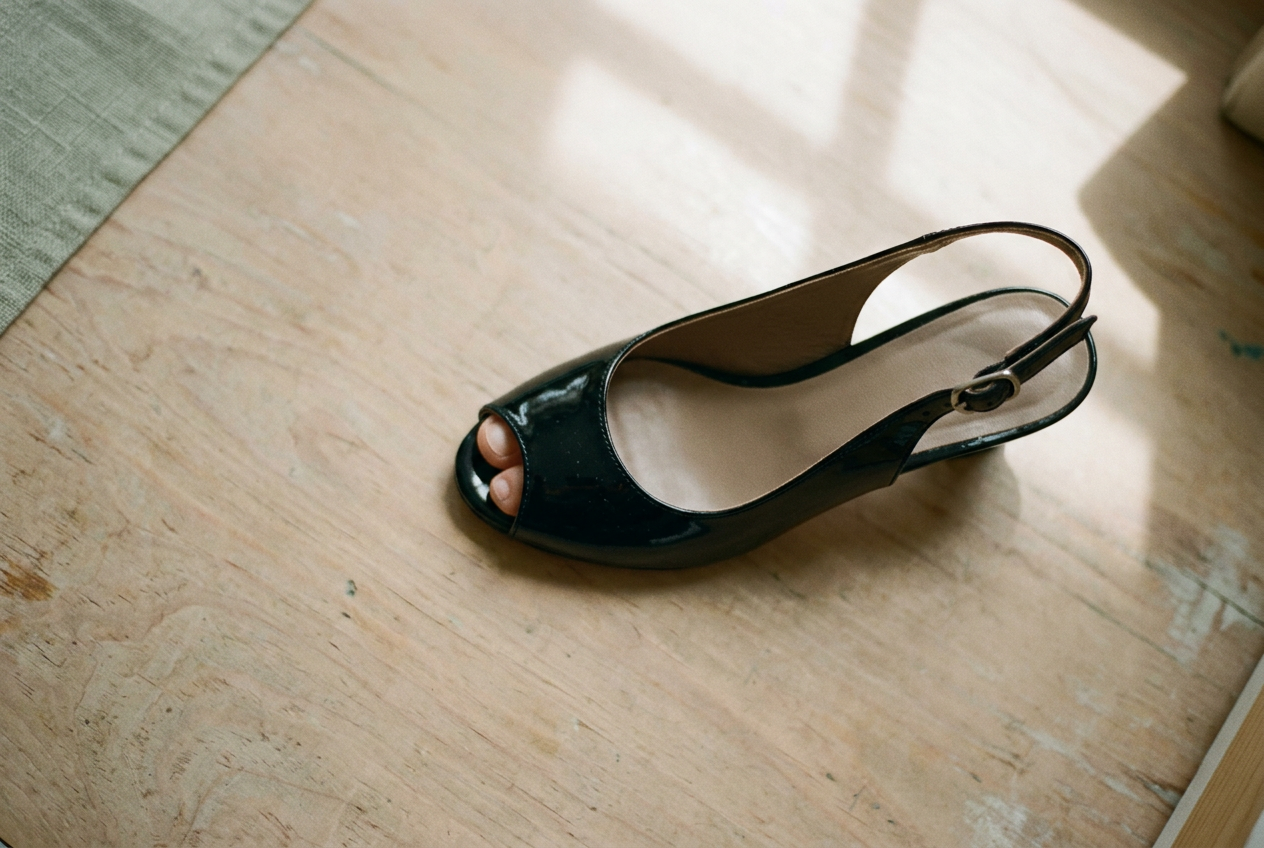
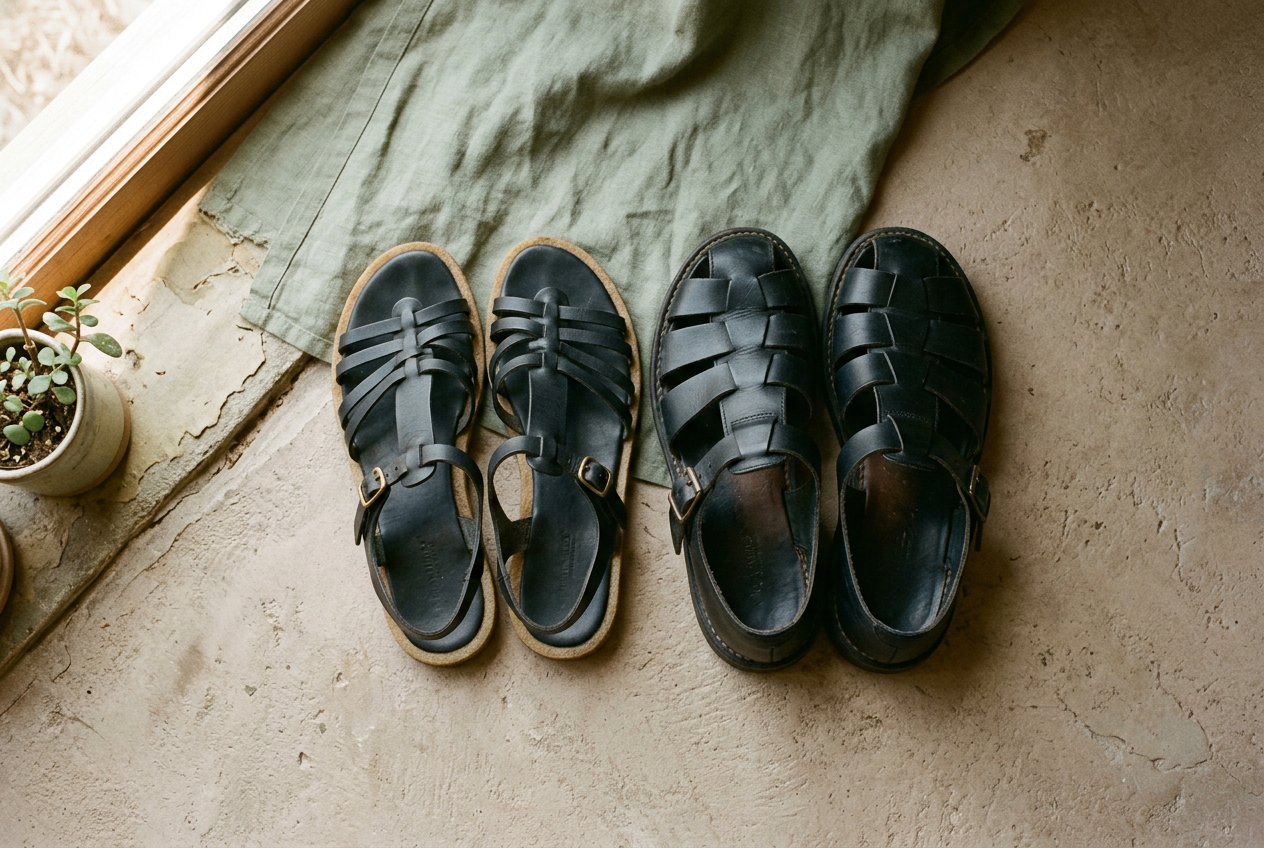
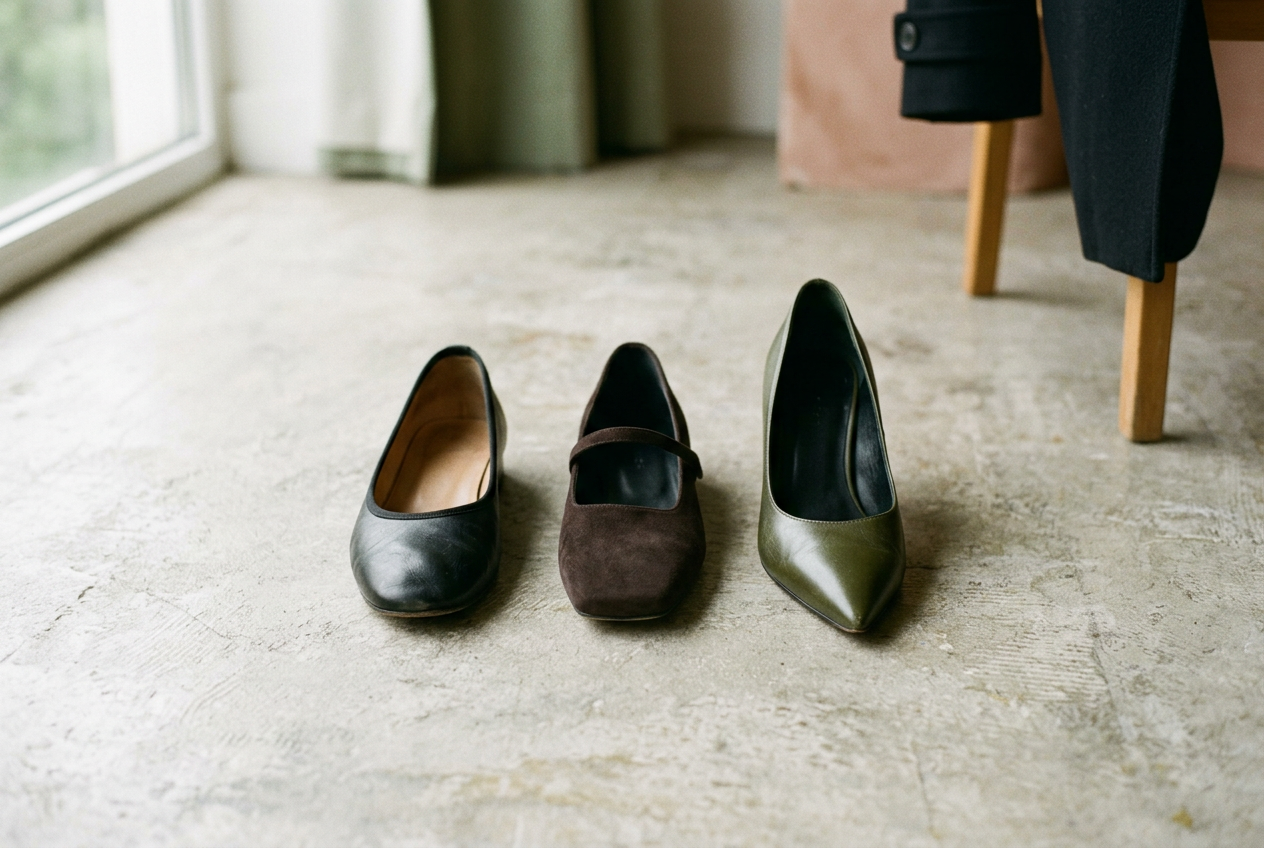
Current styling often pairs capris with delicate footwear, particularly slim flats, low heels and minimal sandals. The exposed lower leg gives those shoes room to register, and a low vamp, the part of the shoe covering the top of the foot, leaves more skin visible between hem and toe. That can extend the line visually.
The block heel gave the black pair the cleanest standing silhouette, but the improvement disappeared once the hem caught during walking. The leather loafers worked after I pinned the hem higher because their structured shape matched the twill and their opening sat low on the foot. A bulky sneaker added volume directly beneath a narrow, tense leg opening, emphasizing the part of the pants that was already failing.
This does not make substantial shoes incompatible with capris. A wider leg can hold its own above a thicker sole, while a fitted athletic capri may look coherent with a running-inspired sneaker because both pieces share a functional vocabulary. Trouble starts when footwear is expected to correct a hem that pinches or a rise that shifts. Shoes control the final few inches.
The pattern controls everything above them.
The useful buying test
Price is not a reliable shortcut here. Capri pants now appear from the usual mass-market trouser band through designer pricing, but a costly fabric cannot compensate for a hem placed on the wrong part of the leg. Until the fit is known, paying a premium for the trend is difficult to justify, particularly when shortening an existing pair of well-fitting trousers may produce a better result.
Alteration is most promising when the waist, hip and thigh already fit and the leg remains wide enough at the planned hem. Before cutting, fold the trousers outward to test several lengths, then walk and sit with the fold pinned safely. A tailor may need to preserve or recreate a side slit if the new opening is close to the calf. Slim tapered trousers are poor candidates when the intended cut line lands where the leg is already narrow.
For ready-to-wear, start with the calf rather than the styling image. Slide two fingers under the hem while standing, then bend the knee and check whether the fabric presses or climbs. Look for diagonal pulling from the outer calf and horizontal creases behind the leg. Next, sit long enough for the waistband to reveal whether it rolls, gaps or tips.
The revived silhouette is easier to wear only when those checks pass. More generous leg shapes and better fabric choices do exist, so this is not merely the same capri returning unchanged. Still, the black twill pair remained more persuasive with an inch of temporary alteration than with any shoe I put under it. Visibility has improved faster than the average fit.
Questions people ask
Where should capri pants end on the leg?
A narrow pair usually works best when the hem clears the fullest part of the calf, either sitting just below it or higher where the leg begins to narrow. The exact point varies by body. If the opening catches after sitting or walking, test another length rather than relying on the mirror while standing.
Should capri pants fit tightly around the calf?
They can sit close, but they should not grip hard enough to ride upward, leave pronounced creases or restrict a bent knee. Look for enough circumference, stretch with good recovery, or a small slit. If sizing up spoils the waist and hip fit, change cuts instead of forcing the larger size.
What shoes work best with capri pants?
Slim flats, low-vamp loafers, minimal sandals and modest heels leave more of the foot visible, which can balance a close capri. Wider legs can support a heavier shoe. Choose footwear after confirming that the hem moves freely, since no shoe can correct a calf opening that pinches.
Are capri pants worth buying now?
They are worth considering if the hem misses the widest calf point and the rise stays level through sitting and walking. Skip a pair that needs constant tugging, even if the price is low. If full-length trousers already fit well, professional shortening may offer a more dependable route into the silhouette.
One update a day
Today's fashion update, in your inbox
One fashion update each morning — no hype, no filler, just pieces worth wearing.