Butter Yellow Bags Look Fresh Until Denim Leaves a Mark
Pale yellow is moving from seasonal accent to useful near-neutral, but bags and belts expose its weak point: dark dye transfer. Material and hardware decide whether it remains easy to wear.
August 10, 2026 · 7 min read
The useful question is no longer whether butter yellow looks current. Recent runway collections and retail assortments have established the direction. The harder question is whether a pale-yellow accessory can function as a neutral without becoming a maintenance project.
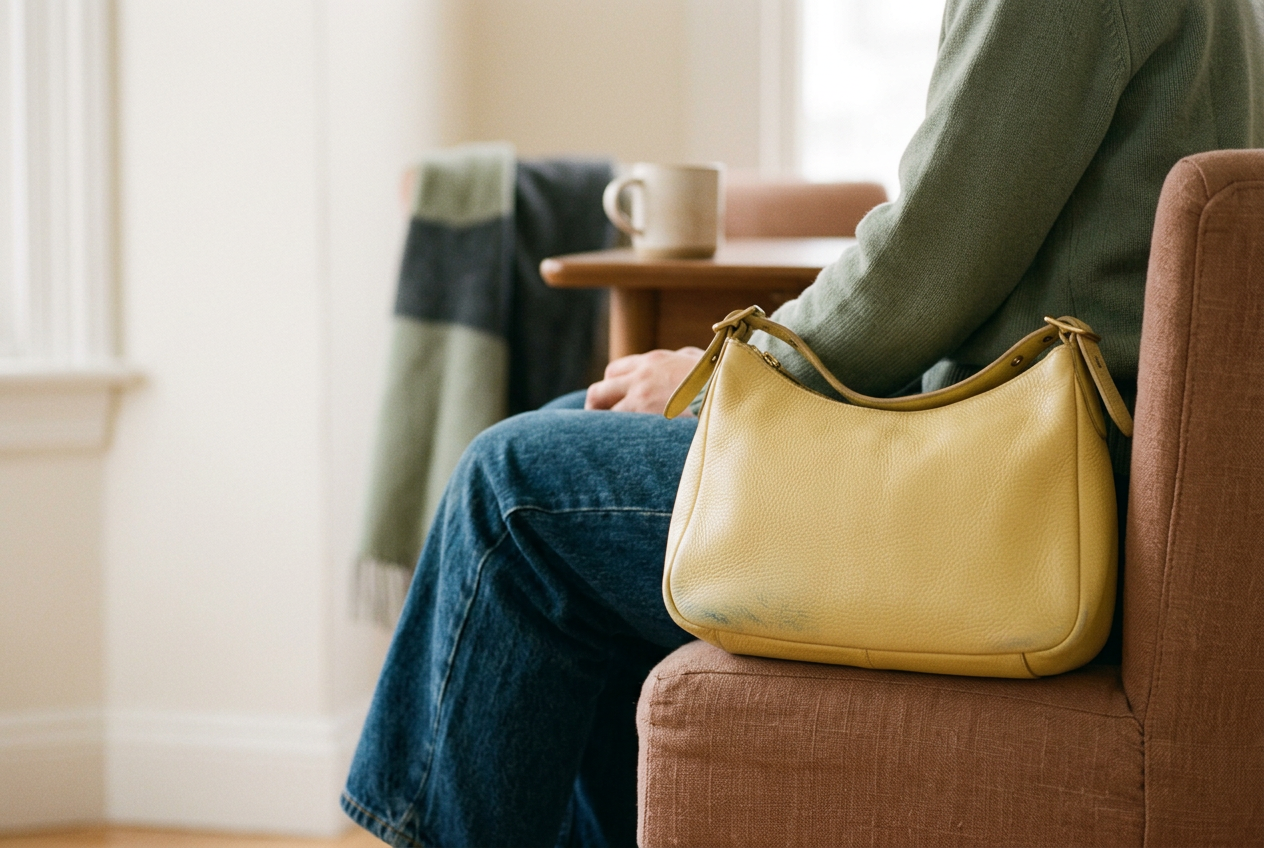
I tested that proposition with one compact shoulder bag in butter-yellow calfskin, finished with a smooth surface, pale edge paint and polished gold-tone hardware. The bag spent a week against dark indigo jeans, ecru trousers, a navy knit and a black nylon jacket. Its cotton-twill lining stayed clean. The lower back corner, where the bag rubbed against denim, did not.
This is unisex coverage because the relevant mechanics do not change across wardrobes: friction, fabric dye and surface finish matter more than the department where the accessory is sold.
The denim problem appears at the contact point
Dark denim can release excess dye through crocking, meaning color transfers when two surfaces rub together. A pale bag exposes that transfer quickly, particularly around its lower corners and the side facing the body, while a belt sits in near-constant contact with waistbands and belt loops.
Before wearing the test bag with dark jeans, I rubbed a clean white cotton cloth along the jeans’ outer thigh. The cloth picked up blue, which was enough warning that the bag might do the same. By the end of the week, a faint gray-blue cast had settled into one back corner. A dry microfiber cloth removed surface dust but not the color; a lightly dampened cloth softened the mark without clearing it, and further home cleaning risked changing the leather finish.
That does not make butter yellow impractical. It changes which object is sensible. Sunglasses, hair accessories and small leather goods spend less time grinding against dyed fabric, while a shoulder bag with a short strap may touch clothing less than a crossbody worn at the hip. Belts face the highest routine exposure because the pale surface repeatedly meets denim at the loops.
Black garments can transfer too. A new black jacket, raw denim or deeply dyed cotton trouser deserves the same white-cloth test, especially if the care label warns that color may rub off. The test takes less than a minute and tells you more than a product photograph can.
Surface finish matters more than softness
The test bag’s smooth calfskin made the color look dense and creamy, but it also presented an uninterrupted surface on which blue transfer could be seen. Smooth pale leather tends to show rubbing before heavily grained leather, whose textured surface breaks up small marks even when it has not prevented them.
A coated leather or coated canvas is usually easier to wipe because the protective layer slows immediate absorption. It is not immune. Prolonged contact can lead to color migration, where dye moves into the coating rather than sitting on top, and that deeper discoloration may resist ordinary cleaning. Patent finishes add wipeability but show scratches and fingerprints, so the trade shifts rather than disappearing.
Suede is the weak choice for a bag expected to meet dark denim. Its raised nap catches loose dye, and aggressive rubbing can flatten the texture or create a lighter patch around the stain. Pale cotton canvas also absorbs readily unless it has a substantial coating. Nylon is less precious and often easier to spot-clean, though the care label still governs what water or detergent the trim can tolerate.
Polyurethane-coated synthetic material can perform well at an accessible price, particularly when the surface is evenly sealed, but pale coatings may crack at folded edges after sustained wear. Inspect the strap holes and corners rather than judging only the front panel. On the calfskin bag, the first visible blue appeared beside the pale edge paint, the sealant applied along a cut leather edge, because that corner received the most friction.
At an investment price, smooth butter-yellow leather is worthwhile only if you accept visible wear or plan to keep it away from dark clothing. Paying more does not make a pale surface resistant to dye. For an accessory around the price of a decent pair of sneakers, coated canvas, grained leather or nylon may offer a calmer introduction to the color.
Test the yellow against your real neutrals
Butter yellow behaves like a near-neutral only when its undertone agrees with the surrounding clothes. Place the accessory beside plain white paper in daylight. A yellow that looks creamy or slightly beige will settle easily among ecru, camel, chocolate brown and warm khaki. One that turns sharper beside white contains more lemon and may sit better with cool gray, optic white or blue-based navy.
The calfskin bag leaned warm. It looked quiet against ecru trousers and a brown belt, where the yellow read as part of the same tonal family, although a full outfit of similarly warm pale shades made the polished gold buckle look sweeter than I wanted. Against charcoal, the bag became clearer and more deliberate. Dark indigo gave the strongest color pairing and the worst practical result.
Cool neutrals do not automatically reject butter yellow. Gray can take away some of its softness, while navy emphasizes the shared blue contrast and makes the yellow appear cleaner. Beige is less reliable than its reputation suggests: a pink-based taupe can make a greenish yellow look slightly sour, while a golden tan may push a creamy yellow toward beige.
Online product images are poor judges of these distinctions because lighting and screen settings shift pale colors. If shopping in person, carry a fabric swatch or wear the trousers and outerwear that will meet the accessory most often. For an online order, compare the item at home in daylight before removing protective films or discarding packaging, and check the return terms before performing any rub test on the product itself.
Hardware changes the temperature
Gold-tone hardware reinforces the warmth of a creamy yellow. On the test bag, the polished buckle made the color feel dressier with brown and ecru, yet it also limited the bag when I wore silver jewelry and cool gray clothing. The mismatch was not disastrous. It was noticeable because the buckle occupied the center of the bag rather than hiding at a zipper end.
Silver-tone hardware gives butter yellow a cooler edge and often connects more easily to denim, black outerwear and white sneakers. Brushed metal, meaning metal with a muted directional finish, attracts less attention than a mirror-polished clasp and allows the color to lead. Black hardware creates a harder outline, though coated buckles can reveal a contrasting base metal where corners wear.
Match the largest visible fitting to the metal you wear most, not every small component. A prominent buckle or chain strap has more influence than a tiny zipper pull. Mixed metals remain workable when one finish is clearly secondary, but paying an investment price for hardware you intend to ignore is not a strong compromise.
A short buying check prevents an expensive stain
Start with the back and bottom rather than the front. Those areas reveal whether the accessory has protective feet, darker piping or a textured panel at likely contact points. A detachable strap adds another option: carrying the bag by hand keeps it away from indigo on days when the cloth test shows transfer.
Read the care instructions before purchase. A pale bag that can only be treated by a specialist carries an ongoing time and cost commitment, while a washable nylon pouch can absorb the same trend with less anxiety. Avoid applying an unapproved protector across the whole item; sprays can darken pale leather, alter suede or react with edge paint. If the maker permits a protector, patch-test it in a hidden area and allow it to dry fully.
The butter-yellow calfskin bag passed the palette test and failed the low-maintenance test. I would still wear it with washed denim, ecru and charcoal, but not with new indigo or black cotton that marks a white cloth. For frequent denim wear, I would choose the same color in grained leather or coated nylon and reserve smooth leather for a smaller item.
That leaves the trend in a useful middle position. Butter yellow is softer than fluorescent yellow and adaptable enough to outlast one summer, but the best version is not automatically the most luxurious one. On a belt or daily shoulder bag, surface engineering matters more than the richness of the leather.
Questions people ask
Does butter yellow work with dark blue denim?
Yes, and the color contrast is one of the strongest ways to wear it. The risk is physical rather than visual: new or dark indigo may rub blue dye onto a pale bag or belt. Test the denim with a white cloth first, and choose a coated or grained surface if the accessory will touch it all day.
Which material is easiest to keep clean?
Coated nylon or coated canvas is usually the least demanding, provided the care label allows wiping. Grained leather disguises small marks better than smooth leather but can still absorb dye. Suede requires the most caution because its nap holds transferred color and may change texture during cleaning.
Can butter yellow accessories have silver hardware?
Silver hardware works particularly well when the yellow leans lemon rather than cream, or when the rest of the wardrobe centers on gray, navy, black and optic white. A brushed silver finish keeps the result quiet. Choose according to the largest visible fitting and the jewelry worn most often.
How should denim dye be removed from a pale leather bag?
Stop rubbing once a dry, clean microfiber cloth fails to lift the mark. Water, household cleaners and leather wipes can change pale finishes or spread the stain, so follow the maker’s care instructions and use a leather specialist when required. Test every approved product on a hidden area before touching the visible corner.
One update a day
Today's fashion update, in your inbox
One fashion update each morning — no hype, no filler, just pieces worth wearing.