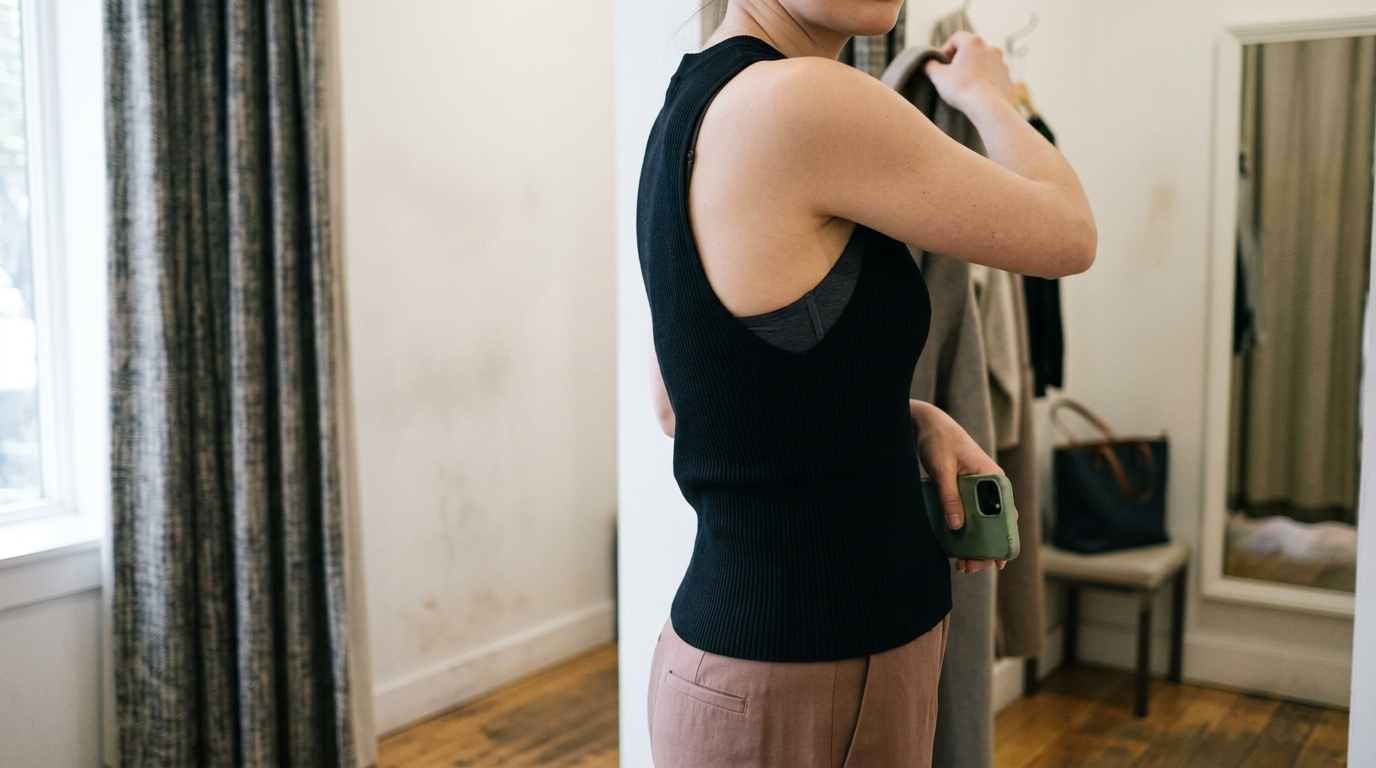
A Tailor Can Fix Some Blazer Shoulders. Others Cost Too Much.
Sleeve twist and a small collar ridge are often fixable. A misplaced shoulder seam or badly balanced chest can turn one alteration into a costly jacket rebuild.
August 10, 2026 · 8 min read
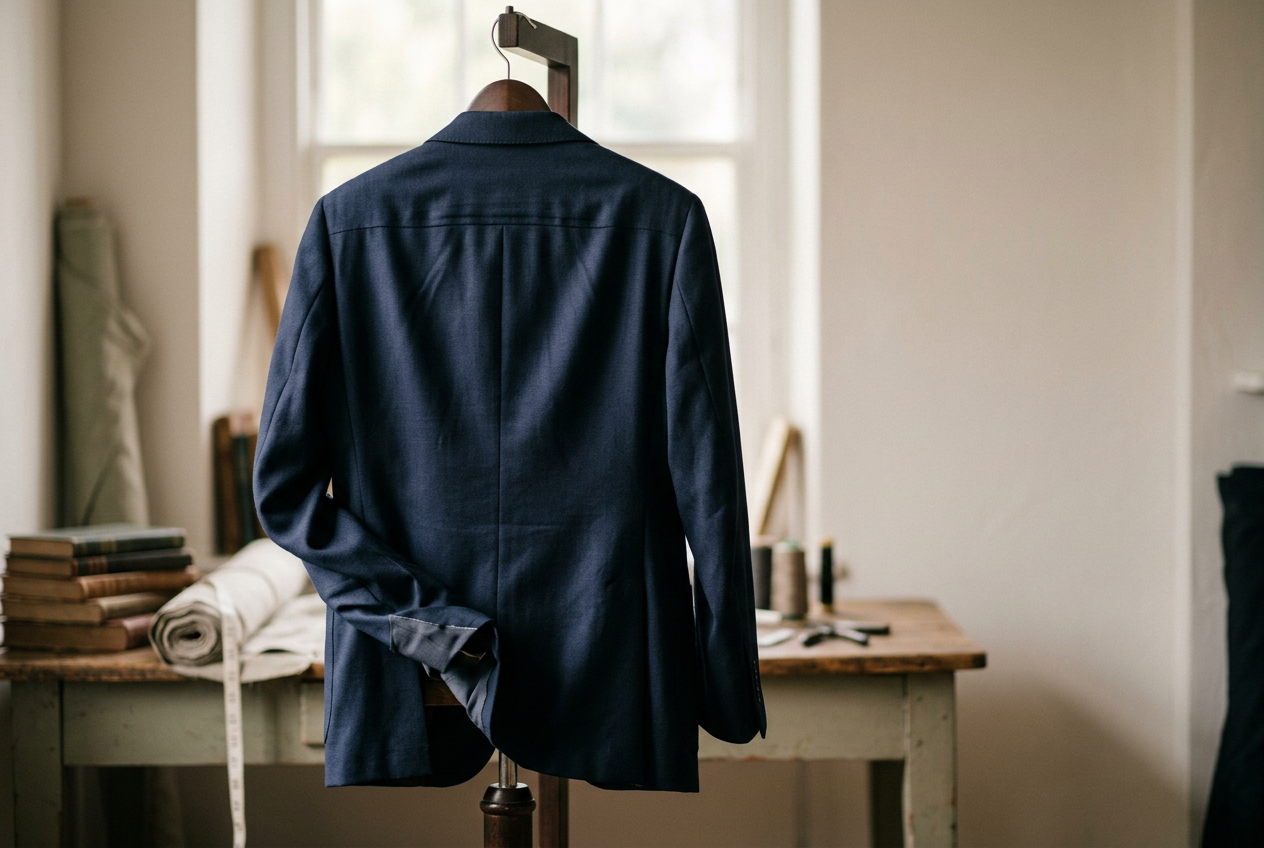
Use a navy, half-canvassed worsted-wool blazer as the reference garment here. Half-canvassed means a sewn-in support layer shapes the chest and lapels, while worsted wool has a smooth surface that shows wrinkles and drag lines clearly. Worn over a cotton poplin shirt, the blazer closes without strain and its shoulder seam appears close to the natural shoulder point. Yet one sleeve twists toward the wrist, and a horizontal ridge sits below the back collar.
Those faults can look like one bad shoulder. They are not. The twisting sleeve points toward sleeve pitch, while the ridge is more likely a collar adjustment. Both may be worth discussing with a capable alterations tailor, especially if the navy blazer otherwise fits through the chest, back and waist.
This is unisex fit advice. Women’s blazers may include more bust shaping and men’s models often use a straighter chest pattern, but sleeve attachment, shoulder width and jacket balance work by the same construction principles.
Diagnose the jacket before discussing alterations
Fit the blazer over the layer you expect to wear most often. A shirt gives a different result from a thick sweater, and tailoring around the wrong layer can leave the finished armhole tight or the collar standing away from the neck. Button the jacket at its intended fastening point, let both arms hang naturally, then look from the front, side and back.
Do not pose. Pulling the shoulders back can hide a collar gap, while holding the arms forward creates wrinkles that disappear in a neutral stance. Take photos at jacket height rather than angling a phone down from the face. A tailor needs to see where the cloth is being pulled, not the posture used for a mirror picture.
On the navy blazer, the shoulder seam is acceptable and the sleeve cap, meaning the curved top of the sleeve inserted into the armhole, lies cleanly. The problem begins lower down: the sleeve seam rotates and the cuff no longer hangs in line with the hand. That distinction saves the jacket from an unnecessary shoulder recut.
A twisted sleeve may be a pitch problem
Sleeve pitch is the angle at which a sleeve hangs from the armhole. Jacket patterns assume a particular arm position, but some people hold their arms farther forward or back than that pattern expects. When the angles disagree, diagonal wrinkles spiral around the upper sleeve even though the shoulder width may be correct.
A tailor can change the pitch by removing the sleeve and rotating it within the armhole before sewing it back in. This is established tailoring work, but it is not a quick sleeve shortening. The sleeve cap must still fit the armhole, the fabric needs enough allowance, and any checks or stripes must reconnect convincingly. A solid navy worsted is more forgiving than a large windowpane pattern.
Treat sleeve-pitch correction as an upper-middle alteration rather than routine maintenance. It costs more than shortening an unfinished cuff because the tailor has to open and rebuild a shaped seam. It can make sense on a well-made blazer that fits everywhere else. On an inexpensive jacket, the labor may be too large a share of the garment’s value.
The key test is movement. If the sleeve looks clean with the arm relaxed and wrinkles only when reaching for a steering wheel, it may be normal tailoring rather than a defect. Jackets are built for a neutral position, not full athletic movement.
Shoulder width is where costs climb
Shoulder width describes where the jacket’s structured shoulder ends relative to the wearer’s body. Some fashion cuts deliberately extend beyond the natural shoulder, so judge the seam against the intended silhouette rather than assuming every blazer should end at the shoulder bone.
An unintentionally wide shoulder often collapses past that point, leaving a hollow below the padding or a dent near the sleeve head. A narrow shoulder can push the upper sleeve outward and produce a divot because the wearer’s arm is occupying space the jacket did not provide. Neither fault should be confused with the twisting sleeve on the navy blazer.
Narrowing a structured shoulder requires more than moving a seam inward. The tailor may need to remove the sleeve, shorten the shoulder line, reshape the armhole, trim or replace padding, adjust the canvas and reset the sleeve. Each change affects the next, and a large reduction can leave the armhole too small or alter the lapel’s position.
Widening is even less promising because jackets rarely contain enough hidden cloth and structural material at the shoulder. Minor pad changes can soften a pronounced shoulder or even out asymmetry, but padding cannot supply missing width without changing the silhouette.
This is high-cost work with an uncertain ceiling. If both shoulder seams are clearly misplaced, another size or another brand’s block, meaning its underlying fit pattern, is usually the better purchase. Extended-shoulder fashion is the exception only when the extra width looks deliberate and the sleeve falls cleanly beneath it.
A ridge below the collar is often manageable
Collar roll is a horizontal fold that forms across the upper back just beneath the jacket collar. It can appear when the wearer has squarer shoulders than the pattern allows, leaving excess cloth at the back neck. On the reference blazer, that is the shallow ridge visible above the shoulder blades.
A tailor may correct a modest roll by removing the collar, taking out a controlled amount of cloth at the back neck and sewing the collar back on. This still requires skill, especially on a jacket with visible topstitching, but it usually disturbs less of the structure than narrowing both shoulders.
A collar that stands away from the neck is a different clue. The cause can sit in the upper back, shoulder slope or chest, and pinning the collar alone may not solve it. If the gap returns when the jacket is buttoned, ask the tailor to assess the whole balance rather than quoting a collar-only fix.
For the navy blazer, a small collar correction and one sleeve reset remain plausible because the chest is quiet and the hem hangs level. If the ridge were paired with pulling lapels and a rising front hem, the calculation would change.
Chest balance can make a shoulder look wrong
Jacket balance is the relationship between the front and back lengths as the garment hangs on the body. A fuller chest, prominent shoulder blades or an erect posture can use up fabric in one area, causing the hem to lift and sending drag lines toward the armhole.
Common signs include lapels that bow away from the chest, fronts that spread below the button, or a back hem that sits lower than the front. Women’s jackets can show the same issue when the pattern lacks enough bust shaping. Sizing up may release the chest but create excess through the shoulder, which trades one structural problem for another.
Correcting balance can require changes through the side seams, armholes, shoulder seams and front canvas. Once a tailor is discussing all of those areas, the work has moved beyond a contained alteration. A different size may help, though a different cut is often more effective because it changes the garment’s proportions rather than enlarging every measurement.
Do not buy a blazer with poor chest balance because the waist can be taken in. Waist suppression is relatively contained; chest and shoulder corrections are not.
Price the repair against the replacement
Ask for separate quotes for the sleeve pitch and collar roll rather than one general shoulder alteration. The first requires removing and resetting a sleeve. The second requires opening the back-neck area and replacing the collar. Separate line items show which correction is consuming the budget and let you approve one without committing to both.
A useful cost ladder starts with cuff or waist adjustments at the lower end, moves through collar work and sleeve resetting, then reaches shoulder reconstruction and chest rebalancing at the top. Exact prices vary with region, fabric, lining and construction, but the structural jobs can approach the cost of another decent blazer.
Also count risk. A solid wool jacket gives the tailor room to disguise a reset, while checks expose any pattern mismatch and fused construction can react poorly to extensive opening and pressing. A fused jacket uses adhesive to bond its chest support to the outer fabric; it is less adaptable than a sewn canvas when major areas must be reshaped.
Return the blazer when the shoulder width is plainly wrong, the chest pulls despite correct button placement, or the proposed work reaches several connected structural areas. Keep the navy blazer when its clean body fit is hard to replace and the quote covers only the twisted sleeve plus that shallow collar ridge.
Questions people ask
Can a tailor make blazer shoulders narrower?
Yes, but narrowing structured shoulders requires removing the sleeves and reshaping the shoulder line, armholes, padding and sometimes the canvas. A very small change may be possible; a visible reduction is expensive and can alter the entire silhouette. Trying a narrower size or a different cut is usually safer.
Can shoulder divots be fixed?
Sometimes. A divot may come from shoulders that are too narrow, an incompatible sleeve shape or padding that ends abruptly. A tailor must identify the cause before changing anything. Small padding or sleeve-head adjustments can help, but a jacket that is tight across the upper body is a poor candidate.
Is sleeve pitch alteration worth paying for?
It can be worthwhile when the blazer fits cleanly through the collar, chest and shoulder width, particularly on a solid, well-constructed wool jacket. It makes less sense when the jacket also needs shoulder reconstruction or chest work, since the combined labor can rival the cost of replacing it.
Should a blazer fit perfectly before tailoring?
The shoulders, chest and overall balance should be close from the start. A tailor can refine sleeve length, waist shape, sleeve pitch and a modest collar roll, but alterations work best when they improve an already compatible pattern. They should not be used to turn the wrong jacket block into the right one.
One update a day
Today's fashion update, in your inbox
One fashion update each morning — no hype, no filler, just pieces worth wearing.