A Silk Dress Shows Where Cost Per Wear Gets It Wrong
Exact cost per wear turns an uncertain future into a neat-looking number. A five-part comparison gives basics and occasion clothes a fairer test.
Women's · August 10, 2026 · 8 min read
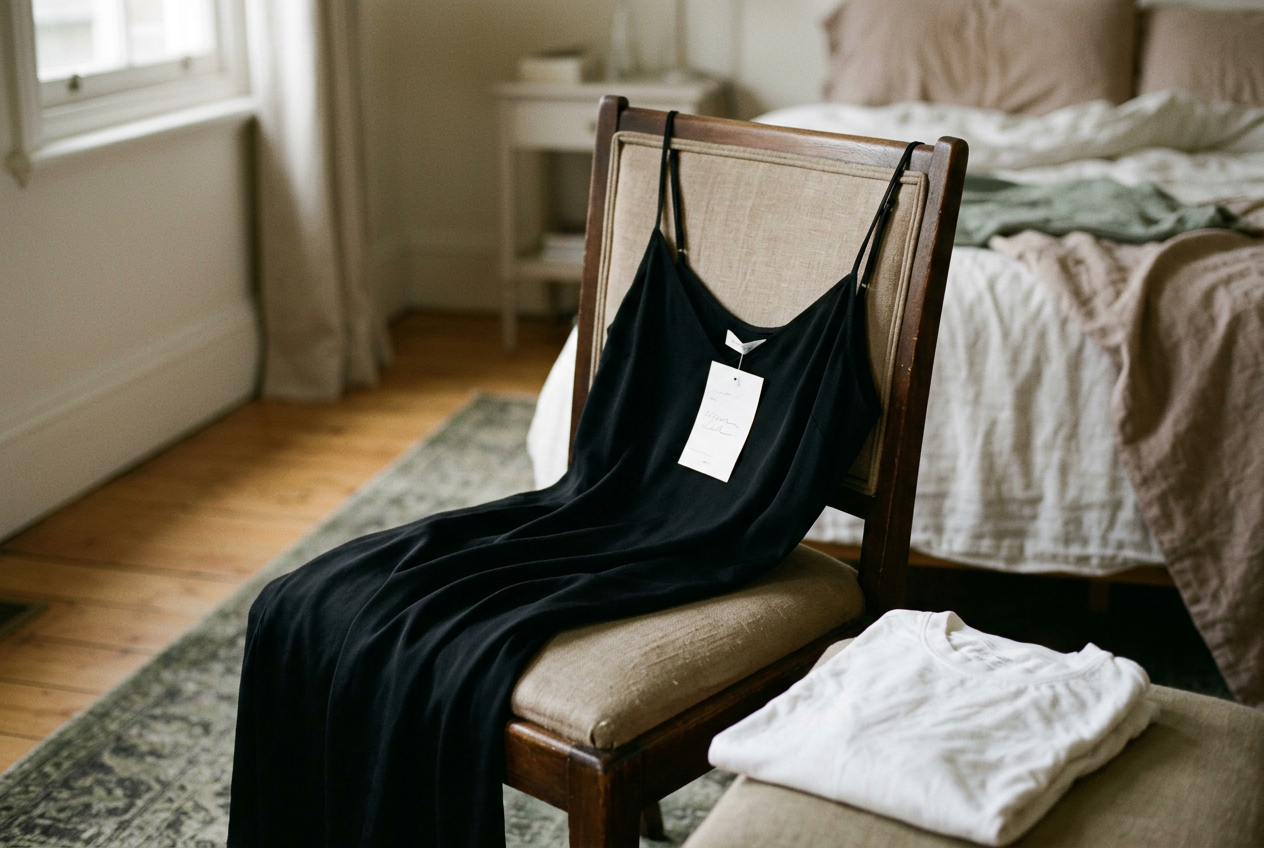
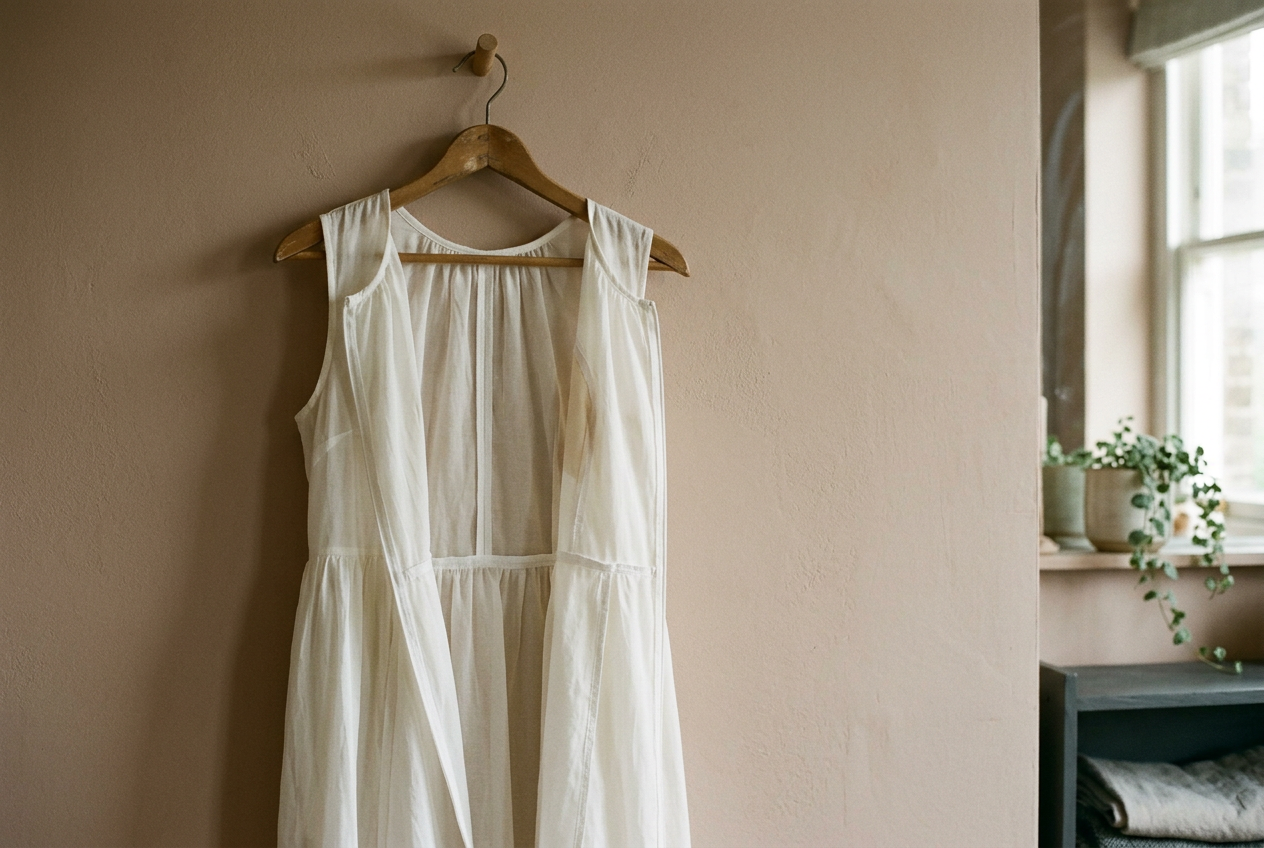
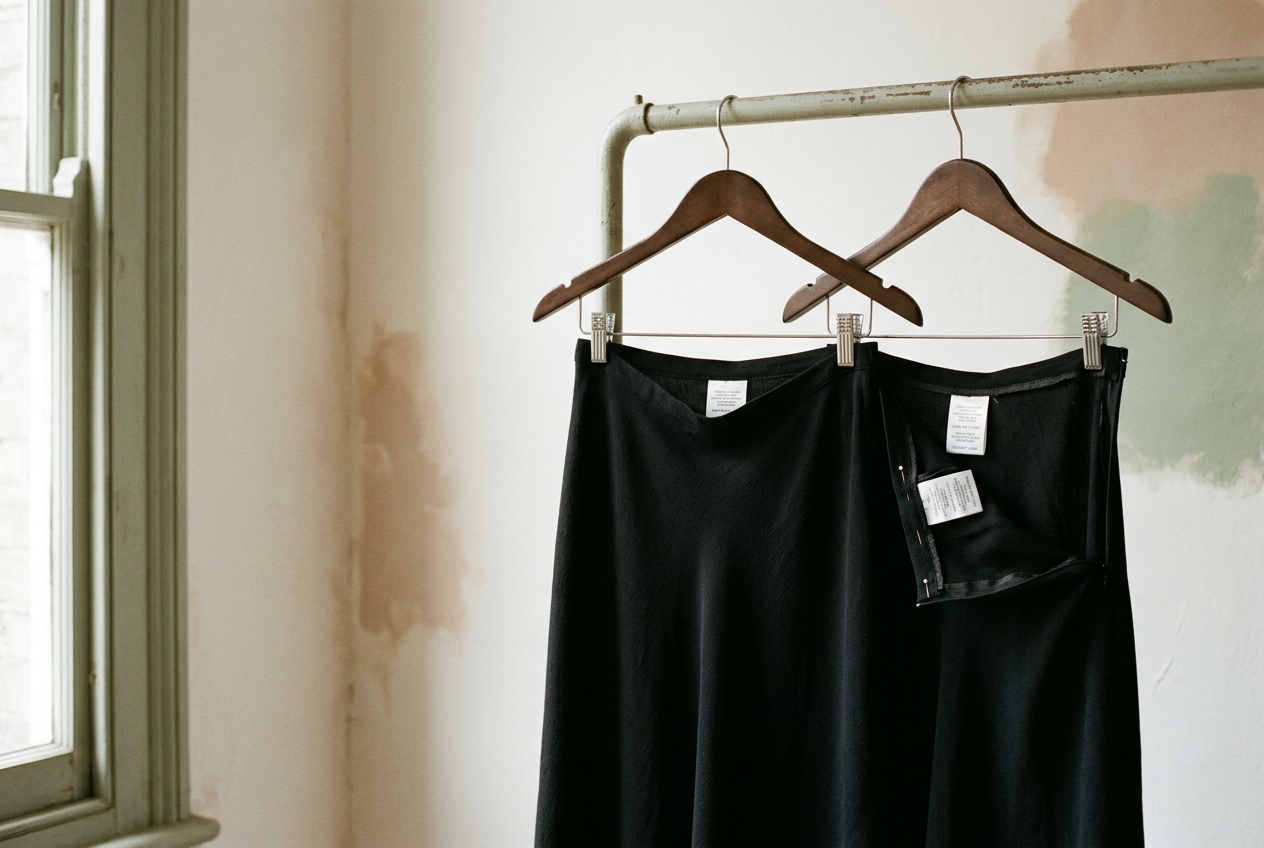
The test case is a black silk crepe slip dress: ankle-skimming, narrow-strapped and bias-cut, meaning the fabric is cut diagonally so it follows the body rather than hanging straight. Its care label says dry clean. The alternative is a washable black dress in a less delicate fabric, while the everyday comparison is a midweight white cotton T-shirt with an opaque body and a bound crewneck.
This is women's coverage, particularly where bra coverage, dress length and close fit matter, although the method works across wardrobes. The dress might be worn to a wedding with low sandals and a small bag, then again to dinner under a fine-gauge cardigan. The T-shirt could be worn weekly, but its collar may soften, its underarms may discolor and its exact white may stop looking right beside the rest of the closet.
Conventional cost per wear, meaning purchase price divided by the number of times an item is worn, would favor the T-shirt almost automatically. That answer looks objective. It rests on a forecast that rarely is.
The number hides the difficult parts
A person can promise to wear the silk dress ten, twenty or fifty times, then change jobs, stop attending formal events or discover that the narrow straps expose every bra in the drawer. A basic can fail just as quickly. The supposedly dependable white tee may twist after washing, shrink in length or become too sheer once the cotton relaxes.
Exact arithmetic also treats every wear as equal. Wearing a T-shirt for two hours under a sweater does not place the same demands on it as wearing the silk dress through a long summer wedding, where perspiration, food and a rough chair can all affect a delicate surface. Nor does the formula include the trip to the cleaner, the steaming before an event or the time spent finding a replacement when a particular neckline disappears from stores.
Use ranges instead. Label expected frequency as regular, occasional or event-specific, based on the calendar and habits that already exist rather than the social life imagined in a fitting room. The point is not to translate those labels back into invented totals. They establish how much uncertainty the purchase carries.
Put the silk dress through five tests
Start with replacement difficulty. The black silk dress is not difficult to describe, yet replacing it precisely could be hard: the neckline must sit above the bra, the straps need to be short enough without cutting into the shoulder, and the hem has to work with both low sandals and a modest heel. Silk crepe has a dry, slightly pebbled surface that reads differently from shiny satin, so substituting another black slip dress may change the whole effect.
The white T-shirt looks easier to replace. Still, note the fit quirks that matter before marking it low difficulty. A high crewneck can crowd the throat; a dropped shoulder changes how it sits under a blazer; a thin jersey may cling where a denser cotton skims. If several brands already make a satisfactory version, replacement difficulty remains low.
If one cut is the only one that works, it moves higher.
Next, record care burden in money, time and tolerance. The silk dress asks for professional cleaning according to its label, plus careful hanging or folding and usually some steaming before wear. Those tasks do not make it a bad purchase, but they count even if cleaning happens only after a marked or sweaty outing. Someone who regularly postpones dry cleaning should treat that burden as high rather than assuming new habits will appear with a nicer dress.
The cotton tee has a lower barrier to washing, though white clothing brings its own work. Makeup at the neckline needs prompt treatment, repeated hot drying can shorten the body, and washing it with dark loads may dull the color. A machine-washable label reduces care burden only when the owner’s normal laundry routine suits the garment.
Versatility comes third, but count situations rather than styling tricks. The silk dress works when its formality, open neckline and body-following cut fit the setting. A cardigan or tailored jacket changes the temperature and amount of skin shown, yet it does not turn the dress into practical clothing for every workplace or daytime errand. Putting a T-shirt underneath may create another outfit, although it can also interrupt the clean bias line and cause bunching at the waist.
The white tee covers a broader set of ordinary situations, from wearing it beneath a suit to pairing it with jeans, but versatility drops if it is too sheer for solo wear or so long that it gathers under high-waisted pants. A versatile garment needs to work with the clothes already owned. Pinterest possibilities do not count.
Repairability is where both pieces become less obvious. The silk dress may have strong enclosed seams, but a pull across the hip can lead to seam slippage, meaning the woven threads shift away from the stitching and leave visible gaps. A snag in the front panel is difficult to disguise, while a loose strap or dropped hem can often be repaired if matching thread and enough fabric remain.
Inspect the inside before paying more. Wide seam allowances give a repairer more material to work with; an extremely narrow rolled hem leaves less room after damage. For the T-shirt, a loose hem can be restitched, but a stretched ribbed collar or widespread underarm staining may end its useful life even when the body fabric remains intact. High frequency does not guarantee long service.
Finally, judge realistic frequency. Look at the previous year’s occasions, work dress code and laundry rhythm. The silk dress should be marked event-specific if there are only a few plausible settings for it, even when it could theoretically be styled several ways. The T-shirt is regular only if white crewnecks are already worn regularly.
Owning several near-identical tees may divide those wears rather than multiply them.
Read the pattern instead of adding a total
Do not convert the five judgments into points. Their relationship is more useful than a grand score.
The silk dress has a defensible investment case when replacement difficulty is high, its event-specific frequency is real rather than aspirational, the care burden is acceptable and the construction leaves ordinary failures repairable. Paying more can make sense when the cut solves a persistent fit problem and the fabric is substantial enough not to pull at every seam. A high price alone proves none of that.
If the same dress has narrow seam allowances, a fragile surface, a cleaner-only label the owner dislikes and no confirmed event beyond one wedding, the premium is hard to defend. A washable alternative, secondhand search or rental deserves priority. Renting carries its own fit and return deadlines, but it prevents one event from becoming a fictional lifetime-wear calculation.
The white T-shirt earns investment differently. Spending more may be reasonable for dense cotton, an opaque finish, a neckline that recovers after washing and a cut that consistently works under jackets. It is less sensible to pay a luxury-level premium on the promise of hundreds of wears when the garment’s likely failure is discoloration or collar fatigue, neither of which an expensive label automatically prevents.
This framework also sets a practical price ceiling. If the silk dress costs roughly what would otherwise cover several competent basics, the scorecard should show a hard-to-replace fit or fabric advantage. If it only offers a familiar silhouette in more delicate material, keep the money for alterations, cleaning or the shoes needed to make the outfit work.
Use the framework in the fitting room
Photograph the care label and interior seams. Sit down in the dress, lift both arms and check whether the bias cut stretches enough to distort the side seams or pull the neckline downward. Try the bra and shoes intended for the first event. A dress that requires replacement underwear and urgent hemming carries a higher real entry cost than its tag suggests.
For the T-shirt, pinch the fabric against the light, check whether the shoulder seam lands where intended and look at the collar after gently stretching it. Read the drying instructions. If maintaining the fit requires air-drying and that never happens at home, mark the care burden honestly.
Then write one word for each test: low, medium or high. Keep the words separate. A high-care, low-frequency silk dress can still be worth buying when it is unusually difficult to replace and fills a known need, while a regular-frequency tee can be poor value when replacement is easy and its main failures cannot be repaired.
Questions people ask
Is cost per wear ever useful?
Yes, as a record after the fact. Tracking completed wears can reveal which categories deserve more or less budget. It becomes unreliable when a shopping decision depends on a precise future total, particularly for occasion clothes, changing sizes or garments with demanding care.
Should basics always get the larger investment budget?
No. A basic deserves more when its fit is hard to replace, its material survives the owner’s normal care routine and its likely damage can be repaired. A common white T-shirt with a collar prone to stretching may offer less lasting value than a well-fitted occasion dress.
Can an occasion dress be versatile with low wear frequency?
Yes. Versatility describes the range of settings and clothes it works with; frequency describes how often those settings occur in real life. The black silk dress may work with sandals, heels, knitwear and tailoring while remaining event-specific for someone who rarely needs formal clothing.
Is a sale price enough to make a difficult-care piece worthwhile?
Only if the reduced price leaves room for the garment’s real demands. For the silk dress, that could include cleaning, steaming, hemming or compatible undergarments. If the care label conflicts with the way laundry is handled at home, the lower tag does not remove the problem.
One update a day
Today's fashion update, in your inbox
One fashion update each morning — no hype, no filler, just pieces worth wearing.